
Fortune telling is a cognitive distortion in which a person habitually predicts negative outcomes (failure, rejection, disaster) without good evidence, and then treats the prediction as established fact. It is a core driver of anxiety, chronic worry, and depression, and a frequent treatment target in cognitive behavioral therapy. The CBT response is to put predictions back on trial: examine the evidence, check your forecasting track record, and act on data rather than dread.
Your brain makes hundreds of predictions before breakfast, and nearly all of them are excellent. You predict the floor will hold, the coffee will be hot, the car will start, and you're right so often that you never notice you're predicting at all.
This forecasting engine is one of the mind's great achievements, which makes its failure mode all the stranger: point the same engine at a job interview, a first date, or tomorrow's presentation while anxiety is running, and it abruptly abandons its own standards. Evidence out, dread in; yet the output arrives stamped with the same certainty as "the floor will hold." Why a superb forecaster becomes a doomsayer under pressure, and what to do about it, is the subject of this article.
Fortune telling is a type of cognitive distortion in which people habitually predict negative outcomes without good evidence. This distorted thinking pattern helps drive anxiety, depression, and chronic worry, and is a frequent treatment target in cognitive behavioral therapy (CBT). Instead of making informed predictions from realistic data, a person engaging in fortune telling assumes the worst will happen, and treats that assumption as fact.
What Is the Fortune Telling Cognitive Distortion?
The distortion isn't prediction itself; it's prediction with the evidence removed and the certainty retained. "I will bomb this interview" is, structurally, a forecast like any other. What makes it fortune telling is its sourcing: it rests not on your interview history or preparation, but on fear, and it refuses the uncertainty that every honest forecast carries. Where a fair prediction says "this could go several ways," fortune telling has already attended the funeral.
Why We Predict the Future, and When It Becomes a Problem
As human beings we rely heavily on anticipating outcomes, and this is usually adaptive. Drink sour, expired milk and you reasonably expect to get sick; board a flight to San Francisco and you expect to land in San Francisco. These are rational predictions built from experience and a sound model of the world. The problem arises when predictions get skewed by fear or insecurity: when we assume failure, rejection, or disaster with no clear supporting evidence. The engine is the same; the fuel has changed from data to dread.
Examples of Fortune Telling
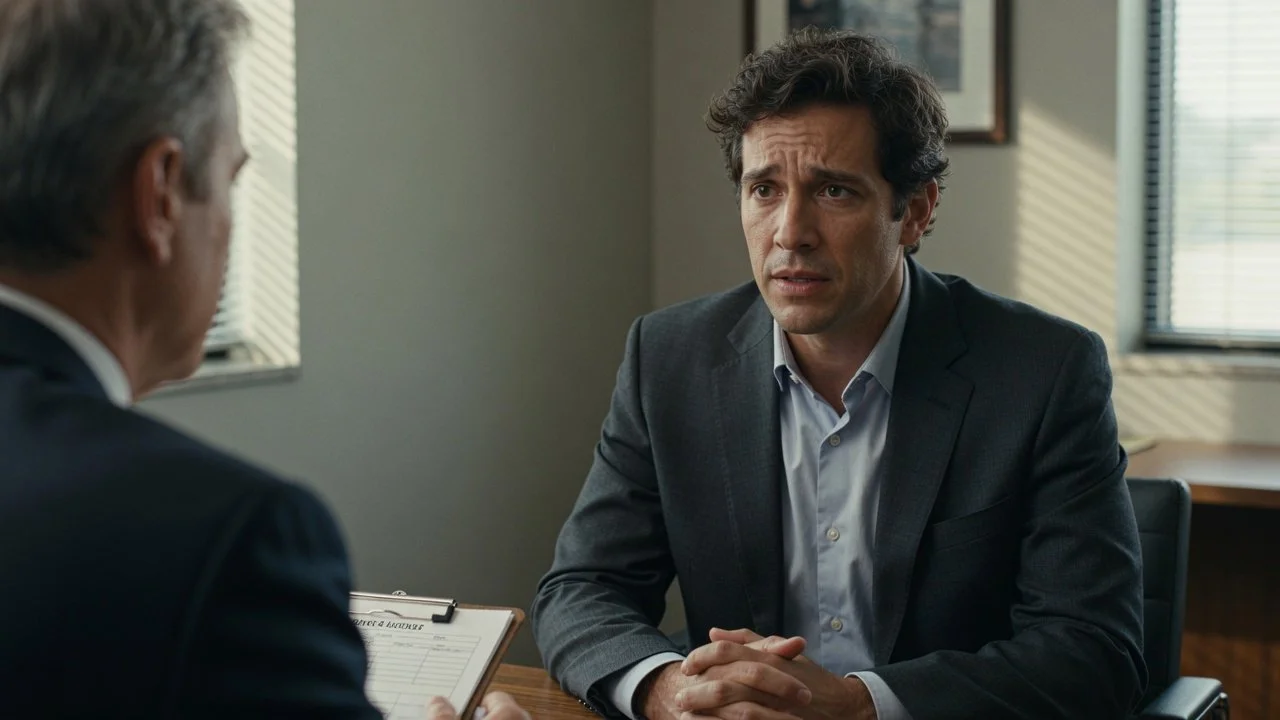
Consider someone preparing for a job interview who has already concluded, days in advance, "they won't like me; I won't get it." The prediction changes the week: preparation feels pointless, sleep suffers, and they walk in flat and defeated) the forecast working to fulfill itself. Other everyday examples: "There's no point asking her out; she'll say no." "I'll never manage this new role, so why apply?" "If I speak up in the meeting, I'll say something stupid." "This flight will be the one that goes down." Each treats one imagined future, the worst one, as the only future available.
Why Fortune Telling Is So Harmful
Fortune telling taxes you twice. You suffer the disaster in advance, in rehearsal, often repeatedly, anxiety's specialty, and the predicted catastrophes feed the chronic what-if machinery targeted in CBT for GAD. Then the prediction bends behavior toward its own fulfillment: you under-prepare for the doomed interview, skip the party where you'd be rejected, and never collect the disconfirming evidence that would retire the forecast. Over time the avoided life shrinks, and the shrinkage reads as proof the predictions were right. Research on cognitive factors in depression shows how hopeless expectations about the future sustain low mood: fortune telling supplies exactly those expectations.
Cognitive Restructuring for Fortune Telling

The repair is to restore the standards your forecaster already uses everywhere else, which resolves this article's opening puzzle: the doomsayer and the superb predictor are the same engine, differing only in what they accept as evidence. Put the prediction on trial: what facts support it, and what facts cut against it? Audit your track record: of the last ten catastrophes you predicted, how many happened? For most chronic fortune tellers the hit rate is startlingly low. Ask what the worry is doing for you: rehearsing disaster feels like preparation, but it changes nothing except your nervous system. And test difficulty directly: predict the outcome, do the thing, record the result: behavioral experiments convert imagined futures into actual data. If you'd like help with this, Learn more about our practice or Schedule a Free Consultation with one of our doctoral-level therapists. For related reading, see The "Act As If" Technique and Overgeneralization: A Cognitive Distortion in CBT, or Contact Us with questions.
Quick Facts About Fortune Telling
• Fortune telling is the cognitive distortion of predicting negative outcomes without evidence and treating the prediction as fact.
• It appears in the standard catalogue of thinking errors identified in cognitive therapy's foundational clinical literature.
• The distortion drives a double cost: pre-suffered catastrophes (anxiety, worry) and self-fulfilling avoidance that prevents disconfirming evidence.
• The CBT remedies are evidence examination, track-record review, and behavioral experiments that test predictions against reality.
FAQ
What is fortune telling in CBT?
Fortune telling is a cognitive distortion in which you predict a negative future (failure, rejection, disaster) without real evidence and respond as if the prediction were fact. It is one of the classic thinking errors targeted in cognitive behavioral therapy.
What are examples of the fortune telling distortion?
"I'll bomb the interview," "she'll say no," "I'll embarrass myself if I speak up," "this will end badly": any confident negative forecast made ahead of the evidence, especially one that changes your behavior before anything has happened.
How is fortune telling different from mind reading?
Both are "jumping to conclusions" distortions. Mind reading assumes you know what others are thinking now; fortune telling assumes you know what will happen next. They often travel together, "he thinks I'm incompetent, so I'll be fired."
How do I stop expecting the worst all the time?
Treat predictions as hypotheses: list evidence for and against, review how often past predictions came true, and run small behavioral experiments to gather real outcomes. If the habit is entrenched or feeding chronic worry, CBT addresses it directly.
Reviewed by Albert Bonfil, PsyD